Showing posts with label Peace. Show all posts

Sunday, March 22, 2026

New Book Series: Pioneering Peace


Liverpool University Press is delighted to announce a new series: Pioneering Peace: New Paradigms in Peace and Conflict Studies led by series editor Brandon Hamber, John Hume and Thomas P. O’Neill Chair in Peace at the International Conflict Research Unit (INCORE) at Ulster University.

Professor Hamber said: ‘Peace remains one of the greatest challenges facing the world today. Building on decades of work at INCORE, we are committed to transcending traditional narratives and embracing diverse perspectives on peace. This book series will critically examine the pathways to sustainable peace, drawing on the lived experiences of communities and addressing complex, intersecting factors that contribute to lasting peace from an interdisciplinary perspective.’

Commissioning editor Christabel Scaife said ‘We are thrilled to be working with INCORE on this exciting new book series. LUP has been publishing on issues of peace and conflict in Northern Ireland for many years; through collaboration with this leading research institute, we look forward to expanding our peace studies list beyond the Northern Irish context to focus on a global “sustainable peace”.’

Find out more about Pioneering Peace: New Paradigms in Peace and Conflict Studies on the LUP website.

To submit a book proposal, please contact Christabel Scaife at c.scaife@liverpool.ac.uk.


Wednesday, February 4, 2026

Irish President, Catherine Connolly Speaks

Great to hear Irish President, Catherine Connolly, speak today at Ulster University. 

A takeaway: "in a world unfortunately that is ever-more consumed with war and militarism...a lesson that we should all tell the world: that peace is normal and that war is not normal and that peace is possible".

Full speech is here if you are interested.

Irish President, Catherine Connolly, Ulster University, 4 Feb 2026

Friday, January 30, 2026

Trump’s ‘Board of Peace’ is really a Board of War

DONALD Trump launched his ‘Board of Peace’ at Davos 2026, with much fanfare, promising to “end decades of suffering, stop generations of hatred and bloodshed”. Initially intended to rebuild Gaza, its mission now appears much broader, marking critical global shifts and raising serious questions about what peace means at the global level.

Through his ‘Board of Peace’, Trump aims to redefine peace by promoting a ‘peace through strength’ approach.

The idea of peace as positive social relationships built on equality and justice has been cast aside. Instead, it is viewed as a form of macro-security enforced by the most powerful through threats and coercion.

This version of peace resembles the international relations of decades past, where stability was thought to be maintained through balancing the power of nations. Security was guaranteed by fear rather than rules or ideas of mutually beneficial cooperation. Arguably, the concept of a balance of power has eroded over the past few decades through multilateral institutions such as the UN, the IMF and the World Bank, which have gained increasing global power.

Additionally, grassroots movements such as those advocating for LGBTQ+ rights and climate-change activism have often emerged from the margins, cutting across traditional forms of political power. These changes Trump and his cronies despise.

In Trump’s view, a return to power politics is necessary, with the US, as the biggest kid on the block, acting as the world’s self-interested policeman.

Inauguration of the Board of Peace at the World Economic Forum 2026 in Davos. Photo: WEF / Flickr / CC BY-NC-SA 4.0 

Peace is transactional or even extractive, with secondary gains for the US, such as oil or rare-earth minerals, flowing from the guarantee of security.

The ‘Board of Peace’ no doubt has been established to further this warped understanding. 

No-one really knows what it will ultimately do. But the trajectory of US foreign policy suggests it will operate more as a ‘Board of War’, legitimising global interventions mainly dictated by Trump, its executive chair.

It would not be surprising if Greenland is the first item on the agenda, with the board endorsing annexation to “promote” global peace. Iran and Cuba might be next.

Only one African country, Morocco, has been invited to join. This reflects Trump’s racist dismissal of African states as ‘shithole’ nations.

But from a more sinister perspective, Africa, rich in resources and riddled with conflict, also seems ripe for the ‘peace through strength’ approach. It could be awkward to be singled out for a Trump ‘peace intervention’ while sitting on the board.

The ‘Board of Peace’ also embodies Trump’s belief that existing global institutions fail to serve US interests and alternative structures are needed. Following his withdrawal from various international organisations, the proposed board aims to replace global bodies such as the UN. It will define its own agenda and legitimacy, centred around Trump, who is the chairman for life with veto power.

In Trump’s words at the launch, the board will “do pretty much whatever we want to do”.

All this reinforces the claim by Mark Carney, the prime minister of Canada, at the World Economic Forum’s annual meeting in Davos, that “the rules-based order is fading”.

The only way out of this, according to Carney, is that “middle powers must act together” in various forms of cooperation, underpinned by values such as respect for human rights, sustainable development and sovereignty.

This speech has been seen as a game-changer, particularly in liberal circles. Carney’s approach, however, misses a fundamental point.

While global institutions have provided a framework for a rules-based world, they have primarily benefited Western nations.

The alarm among Western politicians over Trump’s comments about Greenland reflects a delayed recognition of the power plays that developing nations have faced from the US and Europe for decades.

Western countries have often used the rules-based order to justify toppling governments in the name of democratic peace. They did little to stop the genocide in Gaza.

The International Criminal Court has primarily indicted African leaders, while the likes of Netanyahu remain largely protected. The UN Security Council frequently blocks resolutions that run counter to its interests.

If Carney and his coalition of ‘middle powers’ are serious about ushering in a new era, the normative aspect of their call for collective action requires serious scrutiny.

A radical rethink of the international order is not only overdue but also offers new opportunities.

For example, if the US is no longer interested in cooperating globally, bodies such as the Security Council could be dismantled and replaced with more equitable structures and power in global governance distributed more evenly. Such actions would create a different set of global levers and international players.

The danger right now, however, is that countries such as Canada and the UK – and, of course, the European Union – may become overly focused on the drive to reforge Western alliances while missing the bigger picture.

Nations around the world, including Pakistan, Indonesia, Turkey, Mexico, South Africa, India, and Brazil, are expanding their regional influence alongside the ambitions of China and Russia.

Trump’s national-interest-first approach could encourage other nations to waver in their commitments to the international order and even resort to force to resolve disputes. It is no surprise that some countries often critiqued for their human rights records eagerly joined Trump’s ‘Board of Peace’, despite the $1 billion joining fee.

They will be happy to be lackeys in the absence of anything else, or out of fear that their country might otherwise be next on Trump’s dinner table.

In this context, Carney’s ideas of ‘middle power’, Western-only alliances will do little to promote global stability.

Unless this new approach to partnerships is accompanied by genuine soul-searching about the biases, imbalances and gaps in international institutions, and is founded on renewed north-south cooperation, the world will merely replicate past mistakes.

If discussions on power are now the new norm, real change will only occur when global power dynamics are truly disrupted.

So, the discussion of new alliances should embrace rapidly developing nations and the inclusion and empowerment of the weakest.

This approach recognises that sustainable peace is built on participation and embedded in equality and shared access to power – it is not based on threats. Such broader devolution of power is exactly what Trump, as global bully boy, fears most.

Then again, maybe the ‘Board of Peace’ is just a classic Trump billion-dollar grift, to create a new ‘Board of Peace’ Peace Prize –with only one potential winner.

.  .  .

Originally published by Brandon Hamber in the The Irish News, 28 January 2026

Also published in The Geopolitical Economist, here


Thursday, November 28, 2024

Discussion with Ramin Jahanbegloo on Nonviolence

On 28th November 2024, Conflict Textiles, INNATE, and the Hume O’Neill Chair in Peace at Ulster University hosted an insightful discussion with Iranian political philosopher Ramin Jahanbegloo at the Ulster Museum.


Ramin, known for his extensive writings on nonviolence, including his latest book Thinking Nonviolence: Struggle and Resistance, explored the connection between nonviolence and empowerment. 

The event coincided with the Ulster Museum’s Conflict Textiles exhibition Threads of Empowerment, showcasing textiles that serve as testimonies to empowerment through nonviolent resistance. Ramin's insights were particularly relevant in today’s challenging environment, highlighting the importance of nonviolence in social movements.

Thank you to everyone who attended!

Monday, November 14, 2022

Youth, Peace and Security: Fostering local and global exchange

by Brandon Hamber and Eliz McArdle

In December 2015, the United Nations Security Council adopted Resolution 2250 a landmark resolution recognising young people’s positive role in conflict and post-conflict settings. The UN Secretary-General Antonio Gutteres commissioned a global study on youth and peacebuilding entitled “The Missing Peace” authored by Graeme Simpson, which was presented to the Security Council and then the UN General Assembly in 20181. The report calls for a move away from a deficit model that sees young people as a threat to security. A key message is the importance of recognising and supporting young people as positive contributors to peace. Building on this report, the UN has continued to promote a Youth, Peace and Security (YPS) agenda.

As a contribution to the YPS agenda, the Ulster University authors of this article initiated the Youth, Peace and Security Leadership Series with partners The John and Pat Hume Foundation, the International Fund for Ireland (IFI), and the global peacebuilding organisation Interpeace. The main aim behind the series is to connect Northern Ireland youth work with the global YPS agenda. The specific objectives are to raise the visibility of the role that young people can and do play in peacebuilding and to build local capacities in terms of YPS and leadership.

Launched in March 2021, four public seminars have taken place so far, with 620 attendees across the events. The series has featured young leaders as speakers from Northern Ireland, Libya, Somalia, former Yugoslavia and Sri Lanka (seminars on YouTube). Graeme Simpson, author of the “The Missing Peace” Report, played a crucial role in identifying the international youth leaders who emerged during the report’s development.

Although the seminar turnout has been heartening, awareness-raising alone is limited as it requires those in positions of power to listen and take young people’s work seriously. For this reason, the seminar series has also utilised a capacity-building component using closed facilitated dialogue between youth workers and local and global peer leaders. The seminar series has effectively coupled the public online seminars with private dialogue sessions.

However, meaningful engagement with and between young people requires time and investment. Before the private dialogues, we worked with individual young leaders to help them plan and prepare to meet other local and global young leaders, focusing on the specific seminar themes (e.g. women and Peacebuilding, methods of youth work). Once ready for the private session, a closed meeting between young people from Northern Ireland and border counties and the global peacebuilders took place.

IFI helped select young people for these private sessions through their various projects. Young people joined from IFI-funded groups, including Cliftonville Community Regeneration Forum (CCRF), Limestone United, the Grand Orange Lodge of Ireland and Focus Family Resource Centre.

While there was some initial anxiety about being in the spotlight with adult spectators watching, a curated, private and facilitated approach helped to mitigate any concerns and gave space for the participants to voice their opinions. This approach resulted in a rich discussion and helped identify issues that could be taken to the public seminars.


One of the most notable of these private sessions was with the UN Secretary General’s Envoy on Youth, Jayathma Wickramanayake, who met with 23 young people online for a private session before the public seminar. Prior to meeting the UN Envoy, young people in Northern Ireland and border counties explored the theme of the role of youth in peacebuilding.

In the private session, participants shared perspectives on the leadership acts and actions they undertake and their visions for peace. The UN Envoy helped link their work and the global YPS agenda. The meeting was valuable in discussing strategies for addressing YPS issues and local youth workers and participants said that they felt affirmed by being listened to by the UN Secretary General’s Youth Envoy. The participants then took this learning into the public seminar that followed.

Overall, a considered dialogue ensued in all the private sessions and public events. Global and local considerations were interwoven with a respectful listening and sharing tone. The presence of outsiders with different perspectives was valuable. There is little doubt that the eminence of the global young peacebuilders was important for the local young people. Activism was stimulated by interacting with international YPS advocates.

This type of international sharing was the hallmark of many earlier programmes during the peace process in Northern Ireland and Ireland but has decreased in the last few years. The experience of the YPS Seminar Series suggests it is vital to support this type of work. Northern Ireland and Ireland has much to share and gain from being more centrally keyed into global processes such as the YPS agenda.

This article was first published in Fund Focus, The Newsletter of the International Fund for Ireland, September 2022.

Professor Brandon Hamber is John Hume and Thomas P. O’Neill Chair in Peace based at the International Conflict Research Institute (INCORE) and the Transitional Justice Institute, Ulster University.

Eliz McArdle is a Lecturer in Community Youth Work at Ulster University and Course Director for the Certificate in Youth Studies with franchised partner, YouthAction Northern Ireland. She is member of the Centre for Youth Research and Dialogue at Ulster University.

Wednesday, March 10, 2021

Peace as Violence

On 10 March 2021, I presented a paper entitled "Peace as Violence" at the “Understanding Violence Seminar Series” hosted by the Department of War Studies, King’s College London. This talk explored how peace processes, and the aftermath, are experienced by survivors and former combatants. It argues that the change in context embodies a range of new forms of violence and harm for some. It draws on case studies of empirical research with former combatants and survivors in Northern Ireland and South Africa, as well as the case of some Vietnam Veterans who formed part of a recent research project. It explores how a sequential understanding of trauma can help explain the challenge of reframing meaning away from violence once a formal peace has been established.


Friday, October 20, 2017

Peace, Economics and Education Discussion

Tom O’Neill, Marty Meehan, Brandon Hamber,  Adrian Johnson (IFI)
Great session this morning focusing on Peace, Economics and Education with Marty Meehan, former Congressman and now President of University of Massachusetts Lowell. Also fantastic to see Tom O’Neill and Adrian Johnson (IFI) supporters of INCORE. The event was part of the Donegal County Council Tip O'Neill Diaspora Awards.

Friday, December 18, 2015

Guerrand-Hermès Foundation Peace Dialogue

It was a great pleasure to participate in a peace dialogue in December. On 14-15 Dec 2015, the Guerrand-Hermès Foundation for Peace (GHFP) with partners the Fetzer Institute brought together a small group of international experts at Highley Manor House in Sussex for a first dialogue in this series to consider the nature of peace and how to apply this understanding in determining the structures, systems and institutional cultures required to bring about a common political vision of peace internationally and globally.  The insights from each dialogue and learnings from the Spirit of Humanity Forum 2017 will be disseminated more widely in different forms of report in 2016/7, including volumes of edited books to be published by mainstream publishers. 

Dialogue participants at Highley Manor

Monday, November 23, 2015

Launch of Beyond Walls Documentary

This event will launch a documentary trailer and the next phase of an exciting international conflict transformation project, delivered in partnership between INCORE and Beyond Walls (CIC).

From the end of 2012 until mid-2014 this project gathered learning from experienced practitioners and participants (mostly from veteran/former combatant backgrounds) promoting peace/reconciliation/humanisation in places of deep seated political conflict. Filmed reflective workshops were held and interviews conducted in South Africa, Israel-Palestine, Northern Ireland/North of Ireland and Ireland.

The extensive film footage and written transcripts from these workshops and interviews provide rich, real life material on the challenges of undertaking peace/reconciliation/humanisation work.

Watch the documentary and if you are interested in supporting the completion of the documentary contact Professor Brandon Hamber.

Friday, June 12, 2015

Conference: Peace in the Basque Country

On the 11 June 2015 I spoke at a high level conference entitled "Humanitarian Conference for Peace in the Basque Country focusing on peace in the Basque Country". The event was held in the General Assembly in Paris. I focused on lessons from South Africa and Basque Country.

Wednesday, December 24, 2014

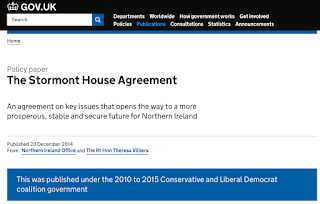
Stormont House Agreement

https://www.gov.uk/government/publications/the-stormont-house-agreement

After 11 weeks of talks at Stormont, this agreement was reached with Northern Ireland’s political leaders, providing a new approach to some of the most difficult issues left over from Northern Ireland’s past. It offers a new start and a far more hopeful future, but will need continued hard work to ensure it fulfils its promise.


Friday, April 11, 2014

President Clinton Back in Derry to Cement the Peace

This week President Clinton made his fifth trip to Derry demonstrating his ongoing commitment to the peace process in Northern Ireland. President Clinton walked the Peace Bridge with Nobel Peace Prize winner John Hume and his wife, Pat. He helped launch a new book, “Peacemaking in the Twenty-First Century,” celebrating the Tip O’Neill peace lectures given at the University of Ulster’s Magee campus, to which he contributed a lecture along with others including John Kerry, Hillary Rodham Clinton, and Kofi Annan.

President Clinton then addressed a public audience of some 3,000 people in the Guildhall Square of the city, along with the Deputy First Minister, Martin McGuinness, and members of other political parties, civil society groups, and Tom O’Neill the son of former US Speaker of the House Tip O’Neill. President Clinton told the crowd “never underestimate the impact that this small place has had on the large world because of that peace agreement…people want to know how it was done. You have inspired the world”. The President pointed out that other societies are looking to Northern Ireland as an example of how violence can be transformed into peace. The recent ceasefire by the Basque-separatist group ETA, and the beginning of decommissioning there, is an example of a society that looked to the Northern Ireland model.

But despite the phenomenal progress and what Northern Ireland has taught others, President Clinton also noted “there are still issues that remain unresolved in the 19 years since the ceasefire and 16 years since the Good Friday Agreement”. The President did not highlight specific issues but his message was well timed. The recent all-party talks facilitated by Richard Haass and Meghan O’Sullivan aimed at addressing the outstanding issues of the peace process, including how to resolve differences about flags, parades and dealing with the past, did not bear fruit.

Derry Peace Bridge, © Brandon Hamber
President Clinton understands the challenges facing the Northern Ireland peace process more than most. He has been an advocate for peace for decades, dating back to his days as the Governor of Arkansas. Campaigning for the presidency in 1992, he promised to appoint a peace envoy to Northern Ireland and said “I think sometimes we are too reluctant to engage ourselves in a positive way because of our long-standing special relationship with Great Britain and also because it seemed such a thorny problem…I think the United States is now in a position to think about positive change”.

Decades of political violence had left more than 3,600 people dead in Northern Ireland, but the United States (US) largely stayed away from the conflict. Hesitant to strain their relationship with Great Britain and unsure of success, the US treated The Troubles as “an internal problem to be worked out” as President Reagan once put it.

Politicians like Tip O’Neill tried to change this policy, and through his friendship with John Hume, managed to increase a focus on the Irish question and establish the International Fund for Ireland, which contributed to job creation and equality. However, it was when President Clinton was elected that there was sufficient political power to reverse the US government policy of non-interventionism.

This policy change however required risks. In 1994, President Clinton granted a US travel visa to Gerry Adams, leader of Sinn Féin. He believed that Adams was serious about making peace and that, if given greater legitimacy, he could help press the IRA to give up violence. The strategy worked. The visa increased Adams’ standing and enabled him to be more involved in the political process. In the words of the Irish Taoiseach, John Bruton, President Clinton’s decision to engage Sinn Féin “…gave them the confidence to end their campaign”. The British were furious at first when the visa was granted, but during his US visit, Adams promised to push Sinn Féin to make concrete positive decisions. Afterward the British accelerated their efforts to get political talks going, and the Irish government pressured Sinn Féin to cooperate. Seven months later, the IRA declared a ceasefire.

It took nearly four years for these initial steps to transform into the Good Friday Agreement of 1998. During this time, President Clinton continued to work for peace with all the parties. He appointed Senator George Mitchell as a peace envoy, and in 1995 became the first sitting US President to visit Northern Ireland, where he reaffirmed his support for a lasting peace. Speaking to a huge crowd in Guildhall Square, nearly 20 years ago now, he praised the ongoing efforts for peace, saying “… I see a peaceful city, a safe city, a hopeful city, full of young people that should have a peaceful and prosperous future here where their roots and families are”.

President Clinton’s engagement helped sustain the parties through years of difficult negotiations and a break in the cease-fire. He responded immediately, for example, after the Omagh Bomb in 1998 and travelled to Northern Ireland to calm tensions and meet the victims’ families. On the last day of negotiations, he stayed up all night on the phone to bring all of the parties together. The Good Friday Agreement was announced the next morning. After the peace agreement was signed, President Clinton remained committed to the future of Northern Ireland. In the last weeks of his presidency, he again visited Belfast, and urged everyone to move forward toward peace and prosperity.

The consistent message coming from President Clinton has through the years resonated with the philosophy of John Hume who always linked non-violence with economic growth. It is no wonder then that President Clinton chose to honour John Hume in his latest visit to Northern Ireland. It was also appropriate that President Clinton announced a Chair in Peace based at INCORE at the University of Ulster named after John Hume and Tip O’Neill, whose collective visions for Northern Ireland President Clinton was able to help realise in his Presidency and beyond.

So Northern Ireland has indeed come a long way in the last two decades. Derry as a city in particular feels a world away from the violence of the past. Last year it was the UK City of Culture and all the people of the city shared in its diversity and cultural heritage, and optimism remains high.

But at the same time, there is deep division in Northern Ireland. For example, only 7% of children go to integrated schools and many communities remain divided by so-called “peace walls”. Residential segregation between largely Catholic and Protestant communities is still a reality. The political process has faltered recently, particularly around how to deal with the past. Many victims of both paramilitary and state violence still feel their needs have not been met, especially in relation to truth and justice.

In this context, we need to thank those who forged the peace and pushed for it, but we also need to stay true to their wider vision, and we cannot be complacent. To echo the timely words of President Clinton this week, despite the progress, the people of Northern Ireland and the politicians needs to free themselves “…of the past so you can embrace it and be proud rather than be imprisoned by it". In short we need to now “finish the job”.

Blog originally published on the Clinton Foundation website, 7 March 2014, click here.

Wednesday, December 25, 2013

All I want for Christmas

Thought at this festive time I'd post an extract from my son's letter to Santa...lego and world peace...what more could a person ask.


Tuesday, April 23, 2013

Interview with His Holiness the Dalai Lama

I cannot explain the honour I had last week of meeting and getting to interview His Holiness the Dalai Lama on his visit to Derry. It was an incredibly moving and interesting discussion. Below I have put part of the interview as published on His Holiness' website.

His Holiness the Dalai Lama speaking on "Philosophies of Peace & Conflict" on April 18, 2013 with Brandon Hamber

Working for Peace, Educating the Heart and Cultivating Compassion in Derry

Press Release from The Office of His Holiness the 14th Dalai Lama of Tibet

April 19th 2013

Derry, Northern Ireland, 18 April 2013 - Today, His Holiness the Dalai Lama made his second visit to Derry, the Irish city whose motto is ‘Life, Truth and Victory’ and is UK City of Culture for 2013. He was invited by his old friend Richard Moore, the Director of the charity Children in Crossfire.

In the morning, His Holiness met Richard Moore, his wife and daughters and several of his brothers and sisters. When Richard remarked that his 93 year old mother was hoping to meet His Holiness, but was not feeling strong enough to go out, His Holiness replied that, if possible, he would like to go to see her.

His His first engagement was at Magee University where he was invited to participate in a conversation with Prof Brandon Hamber about ‘Philosophies of Peace and Conflict.’ In response to Prof Hamber’s question about whether the world is becoming a better place, he said:

“It’s a great honour for me to participate in this discussion. I’m here because of my wonderful friend Richard Moore, who as a young man, not especially religious minded, came to embody deep human values. When tragedy befell him, he didn’t allow himself to become filled with feelings of anger, hatred and resentment. The result is clear; he’s now a happy, peaceful human being.

“In the world at large it seems that people are becoming fed up with war and violence and the sense of ‘them’ and ‘us’ that provokes it is breaking down.”

Asked what his philosophy of peace is, he replied:

“Genuine peace comes about as a result of inner peace, so it starts on an individual level. Then you share it with your family and your neighbourhood. Inner peace is the basis of trust, the basis of friendship and so the basis of a wider peace in society and the world at large. Prayer doesn’t bring about peace, because it’s we who create the trouble, so it’s we who have to fix it.”

Prof Hamber asked if he was optimistic about Tibet and he was clear in his response.

“The problem in Tibet is not a matter of civil war, but that a new guest has come without a proper invitation, armed with a gun. Once that guest arrived, every Tibetan’s way of life came under threat. We have a rich cultural heritage, a culture of peace and compassion, which we want to preserve. Yes, the Tibet issue is linked to what happens in China. And things are changing there so, yes, we can hope. The last prime minister Wen Jiabao often spoke of the need for change and even the need for democracy. In the early 1980s Hu Yaobang went to Tibet. I met him in 1954 when he was head of the Chinese Communist Youth. He visited Lhasa in 1980 and publicly apologised for what had happened in Tibet. He was someone he followed Deng Xiaoping’s stricture, ‘Seek truth from facts’ and he realistically investigated local conditions. Some people say the new leadership seem to be taking a cue from Hu Yaobang’s approach, but it’s still too early to say. In the meantime, our Middle Way Approach attracts a lot of support from Chinese writers, thinkers and even ordinary villagers who get to know about it and understand it.”

To the suggestion that people can become tired of working for peace and reconciliation, His Holiness said that this kind of work is not a matter of choice, but something we have to do. As he frequently tells Tibetans, in the long run the people we are in conflict with are the people we have to live with side by side, so we have to find a peaceful solution. In such situations, resorting to violence is like suicide. Taking a more realistic and holistic view can give us a more positive perspective, whereas getting caught up in the destructive emotions of anger, hatred and fear create unhappiness and bring nothing positive.

Addressing those in his audience who were less than 30 years old, His Holiness said:

“You truly belong to the twenty-first century generation; the future is in your hands.”

The release continues here detailing His Holiness visits to a range of venues in Derry delivering a major talk that afternoon to some 2500 people at the Culture of Compassion event.

Friday, February 8, 2013

15 Years On...

I am part of a group called 15 Years On. It is a group individuals working in peacebuilding, peace research, cross-border and cross-community organisations who have come together to discuss how we might use 2013 to reflect on the successes and failures of the 15 years since the Belfast/Good Friday Agreement and how we might learn from those experiences to do better in the future. In late 2012 we began a year-long conversation about the progress of peace and cooperation in Northern Ireland, and about where we should go from here. We plan this conversation to take place largely online, leading to a culminating event sometime in autumn 2013. I encourage you to visit the project website, http://15yearson.wordpress.com.

Tuesday, May 11, 2004

Mahatma Gandhi Research and Media Service

Don't know if any of you have seen this, the Mahatma Gandhi Research and Media Service. This e-archive is an extensive online resource on Mohandas Karamchand (aka Mahatma) Gandhi in terms of quality and quantity. It provides over 1400 photographs, 17 hours audio online, 8800 books, a day-to-day chronology, Gandhi's life on video (60 min.), over 200 writings online, 44 min. of Gandhi's voice, and over 20 hours film footage. One for you Ghandi lovers out there...