Showing posts with label Violence. Show all posts

Friday, October 6, 2023

Victim Mobilisation: An antidote to denialism, a route to new relationships?


Recently presented at the Harvard University. I addressed the question: "Can bottom-up civil society groups influence how political elites engage in peacebuilding initiatives in a way that improves rather than undermines intergroup relations?" I focused on this from the perspective of victim groups. The paper is below.

Hamber, B. (2023). “Victim Mobilisation: An antidote to denialism, a route to new relationships?” at the Conference on Intergroup Relations After Violent Conflict: Insights from Research and Practice. The conference was held at The Weatherhead Center for International Affairs, Harvard University on 5-6 October 2023.

Wednesday, March 10, 2021

Peace as Violence

On 10 March 2021, I presented a paper entitled "Peace as Violence" at the “Understanding Violence Seminar Series” hosted by the Department of War Studies, King’s College London. This talk explored how peace processes, and the aftermath, are experienced by survivors and former combatants. It argues that the change in context embodies a range of new forms of violence and harm for some. It draws on case studies of empirical research with former combatants and survivors in Northern Ireland and South Africa, as well as the case of some Vietnam Veterans who formed part of a recent research project. It explores how a sequential understanding of trauma can help explain the challenge of reframing meaning away from violence once a formal peace has been established.


Friday, November 6, 2020

Militarised Masculinities and Sustaining Peace

As part of the Geneva Peace Week (2-6 November 2020), I took part in a podcast discussion entitled "Militarised Masculinities and Sustaining Peace: Lessons from the Ground”. The podcast by Impunity Watch and the Master programme in Transitional Justice of the Geneva Academy of International Humanitarian Law and Human Rights provides space for an in-depth debate around this neglected topic. I argue for a more systemic understanding of masculinity and conflict that moves beyond individual acts of masculinised violence, to understanding how systems create militarised masculinity from the role of the military in society to the entertainment industry.  I share the platform with human rights activist Brisna Caxaj from Guatemala, who talks about her experience of militarised masculinity in her context.

Listen Now


Thursday, January 16, 2020

Screenings of Two Indonesian Films

The lastest screenings "Screening Violence" project took place in Dungannon on 16 January 2020, with the support of the Dungannon Film Club, showing two Indonesian films followed by a discussion with participants. The films were Sowan (The Visit) which documents the friendship of two young women, Mien and Murti, who end up on different sides of the political troubles of the mid-1960s. The second film Provocator Damai (Peace Provocateur) is short documentary charts the experiences of Christians and Muslims residing with families of the opposite faith. The second film, in particular, raised an important discussion about the impact of cross-community work in Northern Ireland, with a range of divergent views.


Scene from The Visit (Sowan)
The AHRC Project "Screening Violence: A Transnational Study of Post-Conflict Imaginaries" is undertaken with partners in Newcastle and Bristol University, and works with co-investigators and partners in Algeria, Argentina, Colombia, Northern Ireland and Indonesia.

Thursday, November 7, 2019

Screening Violence: Argentinian Films

The lastest screenings of the Screening Violence Project took place in Dungannon on 7 November 2019, with the support of the Dungannon Film Club, showing two Argentinian films followed by a discussion with participants.

The films shown were "Padre/Father" (Director Santiago Bou Grasso), a short stop motion animation piece that portrays the day-to-day life of a woman who looks after her bedridden military father. The second film was "Who am I?/Quién soy yo?"(Director Estela Bravo), a documentary about the stolen babies of the 1976-83 military dictatorship in Argentina who have recovered their true identity. Needless to say, the films provoked an interesting discussion.

The Argentinian animation can see below, and if you further questions on the project or want to participate contact me.


PADRE from opusBou on Vimeo.

The Chair has continued work on AHRC Project "Screening Violence: A Transnational Study of Post-Conflict Imaginaries" with partners in Newcastle and Bristol University, and works with co-investigators and partners in Algeria, Argentina, Colombia, Northern Ireland and Indonesia.

Wednesday, July 31, 2019

Exodus at New Gate Fringe Festival

The "Screening Violence" project partnered with the New Gate Fringe Festival in Derry/Londonderry, which included a screening of the film "Exodus" and focus group discussion after on 31 July 2018. A panel discussing the movement of Protestants from the City side of Derry was then undertaken and filmed in the evening including panelists Gregory Campbell, Eamon McCann, Pauline Gardiner, Niall Gilmartin, and Adrian Grant.

Panelists Gregory Campbell, Eamon McCann, Pauline Gardiner
Niall Gilmartin, and Adrian Grant

This event was part of the AHRC Project "Screening Violence: A Transnational Study of Post-Conflict Imaginaries" with partners in Newcastle and Bristol University, and works with co-investigators and partners in Algeria, Argentina, Colombia, Northern Ireland and Indonesia.

Friday, June 14, 2019

"Falsos Positivos" Second Screening

I have been continuing work on AHRC Project "Screening Violence: A Transnational Study of Post-Conflict Imaginaries" with partners in Newcastle and Bristol Universities, and works with co-investigators and partners in Algeria, Argentina, Colombia, Northern Ireland and Indonesia. Further data collection was undertaken in the summer, including the screening of the Colombian film "Falsos Positivos" in partnership with the Dungannon Film Club and a focus group following the film to engage the "social imagination of violence" on 14 June 2018. Film trailer below.

Monday, April 1, 2019

Screening Violence: "Falsos Positivos" in Northern Ireland


The field work from the AHRC Project "Screening Violence: A Transnational Study of Post-Conflict Imaginaries" with partners in Newcastle and Bristol Universities, and works with co-investigators and partners in Algeria, Argentina, Colombia, Northern Ireland and Indonesia began this month. Data collection was undertaken in partnership with the Nerve Centre which included the screening of the Colombian film "Falsos Positivos" (see details). A focus group discussion took place following the film to engage the "social imagination of violence".


Friday, February 16, 2018

Screening Violence Project

I am delighted to be part of the Screening Violence Project. Screening Violence is a four-year research and documentary filmmaking project sponsored by the UK Arts and Humanities Research Council (AHRC). The project is based in Newcastle-upon-Tyne, Bristol and Ulster University, and works with co-investigators and partners in Algeria, Argentina, Colombia and Indonesia. Screening Violence is an innovative engagement with communities that have experienced prolonged and entrenched violence of different kinds: from guerrilla warfare, to state sponsored persecution of particular groups, to mass murder, to sectarian conflict. It aims to achieve a new understanding of how social imaginaries shape civil conflicts and transitions to peace. This project recognises visual culture as a key imaginary space where meaning is made about conflict and violence. We therefore engage with communities that have experienced violence through the medium of cinema and documentary film.

For more detail on the project visit the website.

To see all the posts related to this project and ongoing activities, click here.

Wednesday, August 3, 2016

Handbook: “Transforming War Related Identities”


It has been a great privilege for to write the lead article for the Berghof Handbook Dialogue series entitled “Transforming War Related Identities”

The series explores the question of how individuals and collectives can come to terms with war memories or trauma after mass atrocities is crucial for framing post-war relationships. But how do the processes on different levels (individual and collective) and diverse dimensions of identity formation relate to each other? How to deal with trans-generational legacies of violence? How can the needs of the victims be served in an appropriate way, and how to address “cultures of victimhood” that stem from past violence?

These questions are discussed by scholars and practitioners, peace activists, psychologists and social scientists in Berghof Handbook Dialogue 11 (ed. by Beatrix Austin & Martina Fischer).

The following contributions are available on our website:
My contribution  analyses diverse approaches for dealing with painful memories and discusses how different dimensions (interpersonal and intergroup relations, individual and collective memories and identities) relate to one another. The chapter builds on experiences from South Africa and Northern Ireland, where Hamber chairs the International Conflict Research Institute (INCORE) at Ulster University. We asked scholar-practitioners from other contexts to comment on his thoughts. Olivera Simic (Griffith University, Brisbane) and David Becker (Free University, Berlin) focus on working with trauma and reflect on experiences in coping with painful memories in the Balkans. Andrea Zemskov-Züge (Berghof Foundation) brings in examples from the Caucasus (Georgia/Abkhazia) and Undine Whande’s text makes reference to South Africa and to experiences from Germany in dealing with the legacies of the second world war.

You can also purchase the hard copy from Berghof and it includes my response to the above articles, visit here.

This Handbook Dialogue is dedicated to Dan Bar-On, who spent most of his life reflecting on practical approaches for dealing with the past and exploring how people whose lives and identities have been shattered by violence come to live a decent life again.

Monday, February 8, 2016

Masculinites, Violence & Post Conflict

Prof Brandon Hamber gives the closing remarks at the postgraduate conference on Masculinities, Violence and Post Conflict, 14 January 2016, Ulster University. The conference was organised by PhD students in TJI, INCORE and IRISS, and supported by International Alert, Conciliation Resources, Saferworld, and the Political Settlements Research Programme.


Monday, October 19, 2015

Conference: Masculinities, Violence and Post-Conflict

Call for Papers

Postgraduate Conference: Masculinities, Violence and (Post-)Conflict

Date: Thursday, 14 January 2016, 09:00 – 17:00

Venue: Ulster University, York St. Campus (Belfast, Northern Ireland)

The Transitional Justice Institute (TJI) and the International Conflict Research Institute (INCORE) at Ulster University invite proposals for a one-day postgraduate conference on “Masculinities, Violence and (Post-)Conflict” on Thursday, 14 January 2016. This student-led event will offer academic presentations, peer discussion, networking opportunities and expert feedback in a supportive environment. The conference will be followed by an international high-level workshop on Masculinities and Violence on Friday, 15 January 2016, organized by International Alert, Saferworld and Conciliation Resources (CR), providing a forum for both practitioners and international academics to engage on the topic.

The conference will bring together postgraduate students working on the interface between social constructions of masculinities as well as violence and (post-)conflict. Specifically, the conference will focus on the relationship between these areas, assessing how socially constructed notions of masculinities - in their varying forms, including hegemonic and subordinate conceptions - theoretically and conceptually can, and empirically do (or do not), fuel violence or impact the advancement of women's rights. At the same time, we aim to explore how situations of violence and victimisation influence and (re-)shape notions and dynamics of masculinities (both combatant and civilian identities), in itself and in relation to femininities and gender-hierarchies. The conference will therefore move beyond simplified conceptualisations of gender identities and critically explore the largely ambivalent role of masculinities. We thus aim to approach masculinities as both potentially contributing to violence and at the same time as potentially (and factually) vulnerable. Questions to be explored thus include, but are not limited to:

How, conceptually and empirically, can masculinities be linked to violence, including sexual and gender-based violence (SGBV) and violence against women (VAW)?

Conceptually and empirically, what are the relationships between masculinities and femininities, gender equality as well as women's rights within (post-) conflict contexts?

How do situations of violence and (post-)conflict shape masculinities, and how are masculinities (re-)shaped and influenced during conflict and post-conflict lived realities?

How and to what extent do post-conflict peace-building and transitional justice processes consider and address masculinities?

We invite paper proposals from postgraduate students across various disciplines that utilize a gendered lens while exploring the dynamics of, and/or relationships between masculinities, violence and (post-)conflict either conceptually or empirically in different geographical contexts and across time. In-depth case study analyses alongside theoretical explorations and empirically-grounded papers, including feminist theoretical and methodological approaches, are welcome. Speakers and discussants at the conference include, inter alia, Prof. Fionnuala Ni Aolain, Prof. Brandon Hamber (both Ulster University) and Dr. Henri Myrttinen (International Alert).

If you would like to propose a paper, please submit an abstract of max. 250 words and a short one-paragraph academic bio by 15 November 2015 to Philipp Schulz (Schulz-P@email.ulster.ac.uk) and Seamus Campbell (Campbell-S25@email.ulster.ac.uk).

Papers will be grouped thematically and distributed among three main panels. Each panel will have a designated commentator, an established academic or other expert in the field. Commentators will offer expert feedback as well as complement and stimulate peer-discussion. We are seeking the possibility of a publication of contributions (from conference and workshop), for which selected postgraduate papers might also be considered.

Participation and attendance at the conference are free of charge and participants are invited to attend the workshop on the following day. We regret that we are unable to offer travel bursaries or other assistance with costs. 

Wednesday, December 1, 1999

Gun Control: Who is controlling who?

In a survey of 63 states South Africa is second only to Colombia in homicide rates involving a gun. Granted the gun is not the direct problem, but how it is used. It follows that with the frequency of gun-related violence one cannot but think that if there was tighter control, there would be less violence. Murder rates are slowly declining, but the number of people killed with guns is increasing. In 1998 over half of those murdered were killed with guns. The number of licenses issued for gun ownership has simultaneously increased. Nearly 200 000 new firearm licenses are issued each year.

Is this coincidental? Those supporting the gun lobby would say it is. They would argue that it was not legal firearms that were used to kill over 11 000 people last year. They would add they have a right to protect themselves in a dangerous society. In that regard, they are correct, but at the same time, we need to responsibly accept the consequences of incrementally arming ourselves.
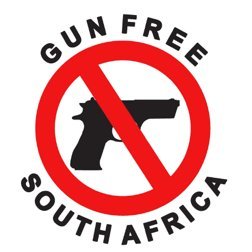
In 1998 alone, 29 694 guns were reported stolen, an average of 80 guns a day. These undoubtedly contributed to predatory murder and armed robbery. A UN Commission shows that owning a gun in South Africa increases your chances of being a victim because criminals target those carrying guns. Further, the proliferation of illegal and legal firearms in South Africa is increasingly creating a culture, especially amongst the young that a gun is a normal and fashionable accessory. The paradox of gun ownership is that carrying a gun may make you feel safer, but it actually increases the chances of other types of victimisation of yourself and others.

To promote responsible gun ownership in South Africa a new Bill was passed by Cabinet last month. Intense opposition from the South African gun lobby then ensued. They feel they were not consulted and that the Bill, which stresses the tighter control of legal firearms and the screening and renewal of applicants for licenses, is untenable.

The issue of consultation is difficult to understand. The Bill is not law. It has been forwarded to Parliament where a full public consultation process and public hearings will take place early next year. Only then will the Bill become law.

The misguided complaints about insufficient consultation by the gun lobby have helped create the polemical impression that gun owners have been side-lined. The gun lobby has helped create a perception that the Bill advocates that it will be impossible to get a licensed gun. This is simply not true. The Bill is about gun control, not gun eradication. Those who wish to own guns for self-defence purposes will be able to do so. Special interest groups such as hunters and collectors will not be limited in the number of guns they can own.

Applicants will be screened before a gun license will be issued. They will have to pass a verbal competency test, provide a certificate that they have been trained to use the weapon, and sign an affidavit that they are not a substance abuser or have a history of violence. It seems strange that anyone would oppose this. We have to pass a test to drive a car, surely a test, and a minimal one at that, to use a deadly weapon should be welcomed. Surely any rational person would acknowledge the importance of having competent and stable gun users.

Renewal of licenses and screening is, according to the gun lobby, also too expensive. Again they have stretched the truth. Guns used by hunters will only have to be renewed every 10 years, and for self-defence users every five years. It is only licenses for especially deadly weapons such as semi-automatic arms that will have to be renewed every two years.

Guns have other costs that the gun lobby routinely fail to mention. Not only is there a human cost associated with the thousands of gun-related fatalities each year, but gun injuries cost the state a fortune. From a study conducted at Groote Schuur Hospital in 1993, it can be estimated that every 1000 patients treated for gunshot injury will cost about 30 million rand. One can also only speculate the cost involved in processing the 38 000 cases of negligent use of firearms the police had to deal with last year.

Granted the Bill focuses extensively on legal firearms. But licensing and regulation of guns has been shown to reduce the misuse of firearms across the board. In a study in Australia, it has been unequivocally shown that tighter gun laws reduce firearm-related crime.

Furthermore, the Bill addresses illegal weapons. It advocates mandatory 15 to 25-year sentences for illegal ownership and gives the police extensive powers to curb the proliferation of illegal weapons.

The Bill is hardly as draconian as the gun lobby would like us to believe. It simply advocates responsible usage and control that any thoughtful South African would support.

If you have nothing to hide, you have nothing to fear. Gun control exists in most democracies. It sends out the message that guns are not toys and they need to be treated with due caution. It is high time a culture of respect of the destructive capability of guns was developed. At the same time the Bill starts to address the problem of illegal weapons.

It seems as if many South African gun owners protest too much and believe it is their constitutional right to mislead the public. They assume that if they are responsible with their guns others will be. They presuppose that their weapon will not be stolen and misused. They fail to mention that a gun owner is four times more likely to have their gun stolen than to use it in self-defence. They also live in a false reality that a gun accident will not happen to them, but then again so do most victims of violence until it happens. Their need for a gun seems to be controlling them, rather than acknowledging that it is time we responsibly took control of guns.

Published by Brandon Hamber, Centre for the Study of Violence and Reconciliation, Johannesburg, 1 December 1999.

Saturday, June 14, 1997

What Happens when you are Exposed to Violence

Thabo, 17 years old, witnessed the death of his father during a violent robbery. Since that time he has been unable to sleep, has nightmares, feels very sad most of the time, has been fighting with his friends and cannot stop thinking about the event. He blames himself and in his head he goes over and over what he could have done to prevent his father's death. Thabo is experiencing what can be called a post (after) traumatic response.

Thabo's reactions are common in people who have been in dangerous situations in which they have been powerless. These sorts of situations generally involve seeing violence or being a victim of violence, although any dangerous situation can cause such a reaction. Examples include violent crime, assault, threats, car accidents, being in war situations, rape and political violence.

When in situations like these people often feel like they cannot cope. Others say that during the event they felt numb, like they were frozen. After the event people experience reactions that affect their behaviour and emotions.

Photo by Jon Tyson / Unsplash
Feelings of confusion, headaches, vomiting, feeling cold, being without feelings and shaking are common. In most cases people cannot sleep after the incident and have nightmares. Feelings of suddenly being back in the situation and not being able to stop thinking about it are common. Being scared all the time, worried and unable to relax is typical. Some may talk about the event all the time and others may try to keep it to themselves. Feeling depressed, sad, crying all the time and not wanting to do your normal activities can also happen. Everyone feels guilty and most people blame themselves for what happened.

The life-style of the person can change. Often people find that they lose their tempers easily, close relationships are difficult and many people feel very angry. At work most people find it hard to concentrate and seem to forget things. In the long-term, and in extreme cases, some people get self-destructive (i.e. purposefully hurt themselves), many people start drinking a lot of alcohol or taking drugs and other people even want to kill themselves.

When all of these feelings start happening most people feel that they are going crazy and will be unable to cope anymore. However, it is important to know that to experience these feelings is normal and natural. People often have these types of responses to trauma. People who have these responses are not sick or weak. They will usually get strong and feel well again if they get support from their families, community members (e.g. priests) and people who are trained to help with these sorts of problems like trauma counsellors and psychologists.

If you have been exposed to violence do not be afraid to seek help. Speak to those you trust and share your experiences. Services are also available, phone Sophie or Mpho at the Trauma Clinic (Tel: 011 403-5102) for more information or if you would like to speak to someone about your difficulties.

Published by Brandon Hamber & Mercy Hlungwani on 14 June 1997 for Centre for the Study of Violence and Reconciliation, South Africa.

Brandon Hamber is a clinical psychologist.

Mercy Hlungwani is a psychiatric nurse.